MIDGET TOWN
Sometimes true stories are the ones you wish were fiction.
Though ultimately written to entertain, this is one of those stories that fall under the “memoir” categorization and is not a work of fiction, thus I ask that readers be mindful of both the sensitive nature of themes discussed (suicide, death, drugs, alcohol) and the lives directly impacted by the following events
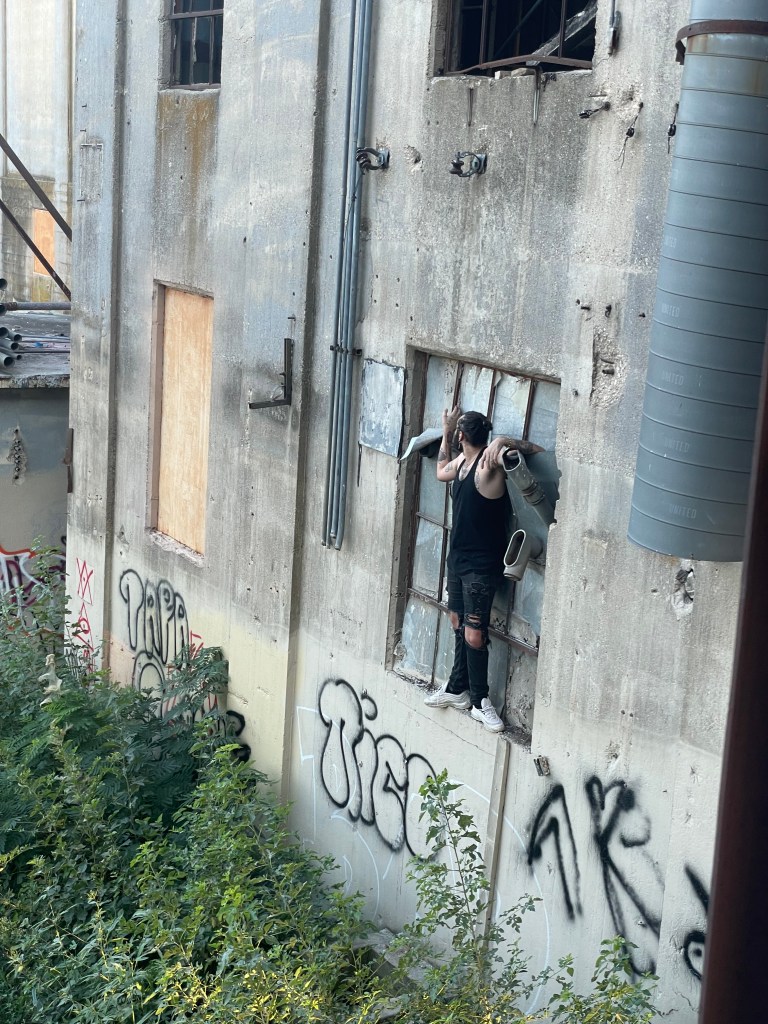
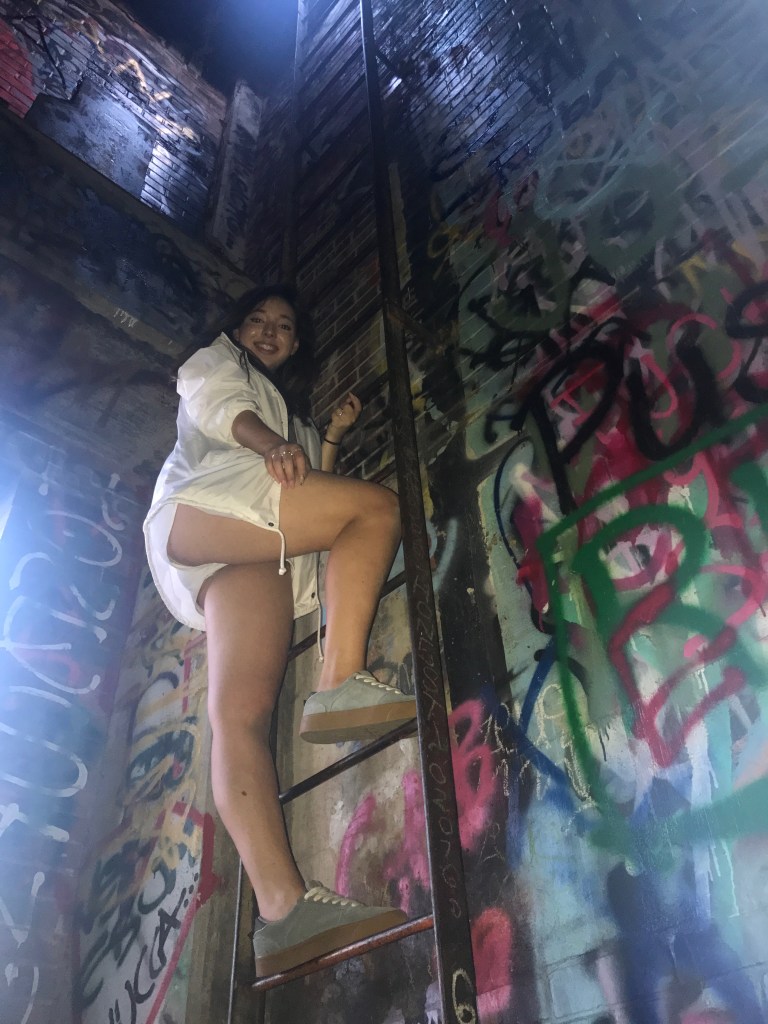
Photos included at the end
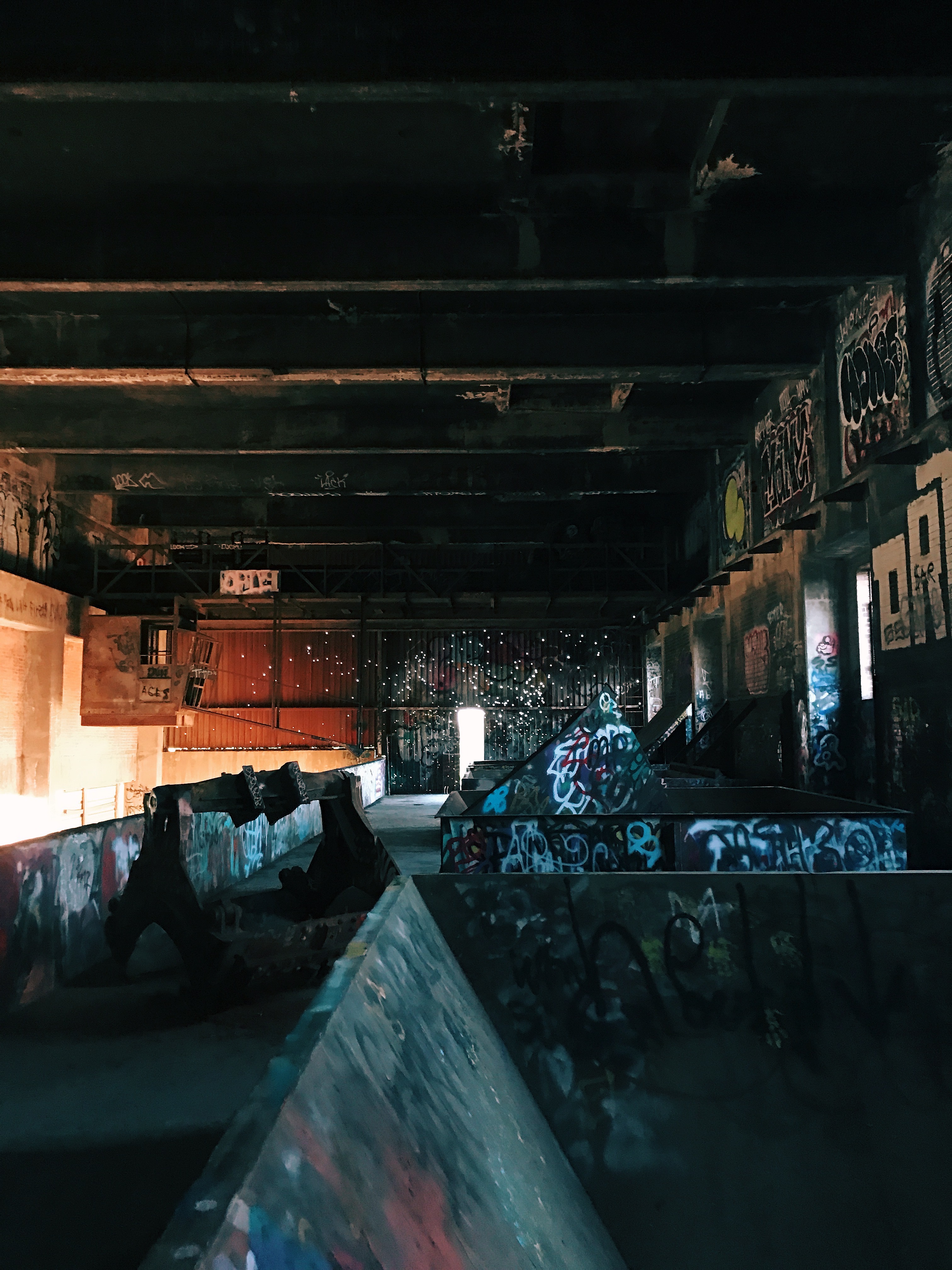
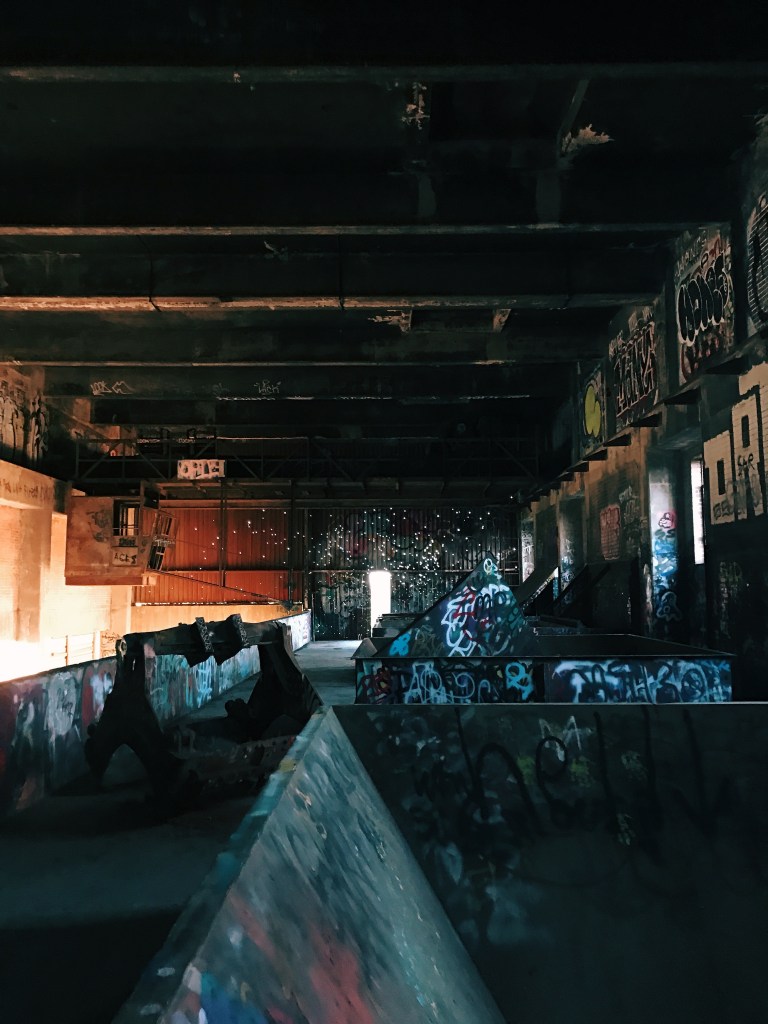
Just east of Echo Lake, in a desolate, shadowed stretch of town that could’ve easily birthed the phrase “wrong side of the tracks,” stands the old incinerator. Its rusted smokestacks, long retired, stretch like dead fingers toward the cloudless sky, casting eerie silhouettes over the railroad below. Once alive with the roar of machinery and the sweaty clamor of coal shovelers, the incinerator now stands hollow and decaying, its brutalist walls overtaken by creeping verdant weeds and electric bursts of color left by restless spray cans that reclaim the structure in an awe-inspiring, chaotic rebirth understood only by the intrepid few who venture inside.
By the time I became aware of its lonely existence on the outskirts of the city, the once noble bastion of industry had become a refuge for the lost and purposeless. A revolving door of wandering souls; tormented junkies, drifters discarded, proud graffiti artists and thrill-seeking teenagers daring the darkness to adopt them in a jaded attempt to feel like the main character in a story they could rarely identify as their own. Back then, I was all of the above.
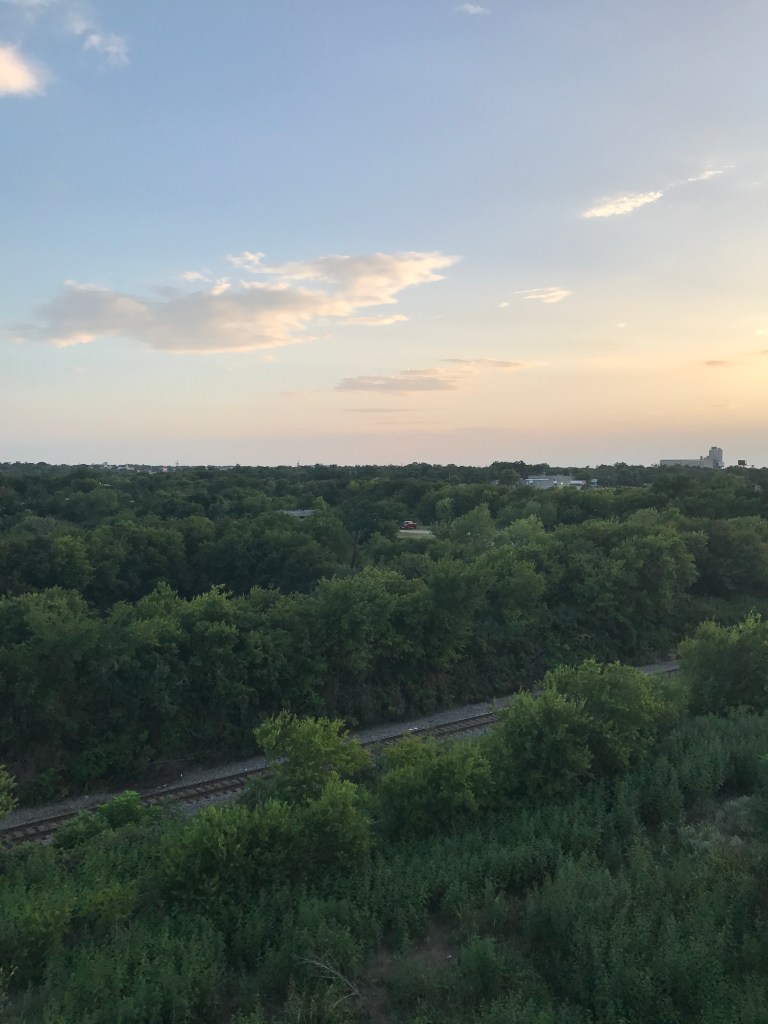
The infamous structure, known locally as Midget Town, inspired countless rumors and conspiracy theories in the years since its abandonment. Unsurprisingly, it was also one of my favorite places to waste an afternoon as one of those aforementioned jaded teens, hungrily inhaling the fumes of neon pink and white spray paint I used to tag each floor. I marked my temporary existence in this seemingly eternal space as I cautiously made my way up the rusty, semi-collapsed ladder to the roof where we would drink, smoke, and admire the dazzling Texas sunsets. We reveled in the sense of freedom and peace so sought after yet so elusive- except, somehow, atop Fort Worth’s most eligible monument to the slow collapse of industry (and most likely place to contract tetanus).
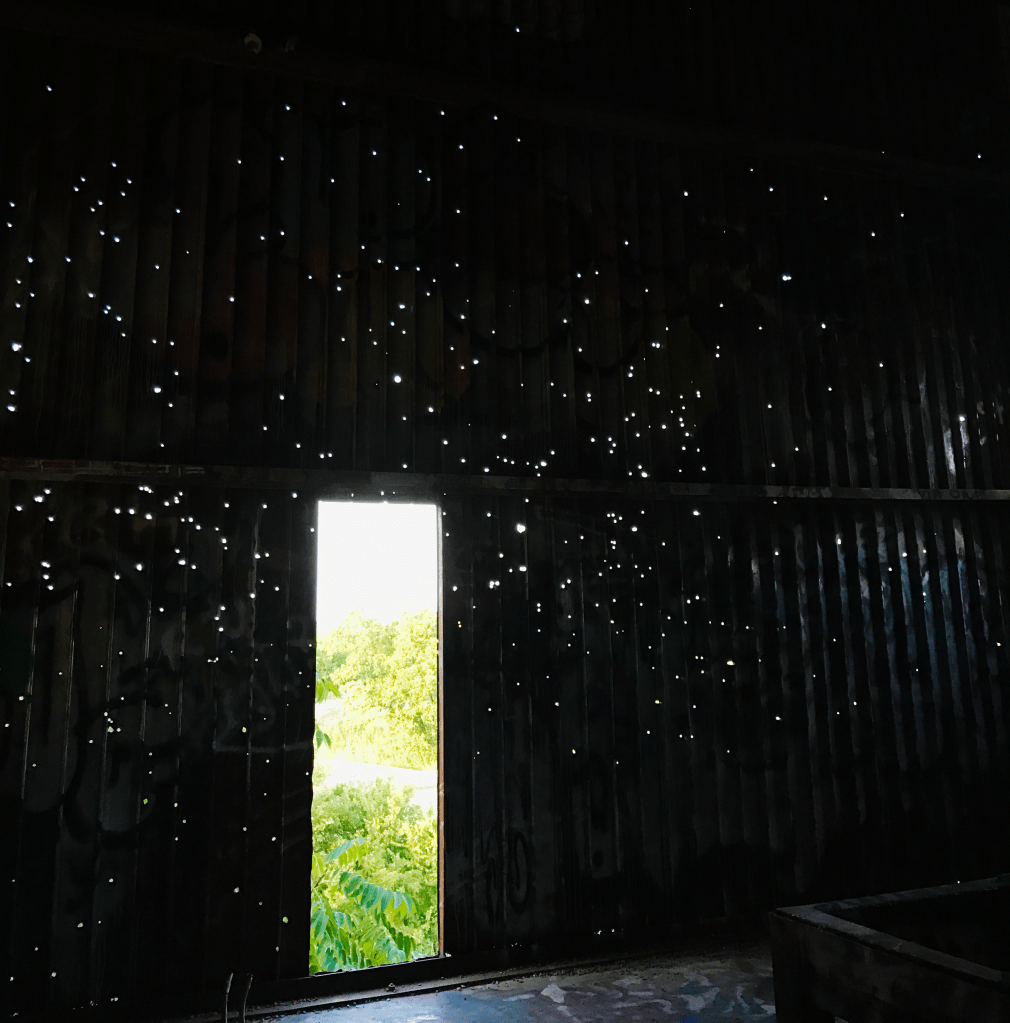
My favorite part of the complex, however, wasn’t the roof but the third floor. Rounding a crumbling cement staircase of questionable structural integrity into a vast hall, you were immediately confronted with a gigantic expanse of corrugated metal riddled with so many bullet holes that the sunlight streaming into the dark cavernous atrium gave the wall the appearance of a million shining stars in the night sky, more striking than any I’d ever seen in the light-polluted city. This room, with its breathtaking mural of ballistic constellations, always brought me an unexpected sense of tranquility, despite the shell casings and broken syringes that lay scattered at its base.
The complex had been shut down for so long it wasn’t listed on any map- you had to circle the area endlessly, searching for just the right back road next to just the right fence that, once climbed over, led through dense, unkempt brush to the building itself. Consequently, Midget Town became known for hosting all sorts of degeneracy, infamous for its overdoses, shootouts, and alleged satanic rituals. None of this bothered us, as we abided by one golden rule: always leave before nightfall. Nothing good ever happens in Midget Town after dark, and we shared a mutual understanding that no matter what, we’d be gone with the setting sun.
Years later, home for the summer after university abroad and bored with our usual bars and front porches, my boyfriend Aaron, our best friend Jalen, and I made a pilgrimage back to Midget Town for old times’ sake. Back then, I was dating a schizoaffective dealer who got loud when he was high and violent when he wasn’t. Jalen was an equally intimidating ex-Marine who liked his whiskey strong, his coke uncut, and his fights short- but never sweet. All things considered, I was in good company for a petite 5’2” Latina with a litany of unchecked mental health problems and an insatiable adrenaline addiction that landed me in every manner of reckless, life-threatening debauchery imaginable. To put it bluntly, we were a lot of fun at parties.
Around 6 p.m., with a solid two hours to spare before nightfall, we approached the oppressive concrete building once again. This time was different, though- we were annoyed to find that every entrance we’d once used had been completely boarded up, denying us access to a place we almost felt belonged to us. As it turned out, a girl had fallen from one of the ledges, prompting the city council to shut the place down for good.
“Typical, some random bitch ruined Midget Town for the rest of us”, I muttered. Frustrated, we searched for another way in, and eventually I found a loose panel that formed a makeshift door we could pull open and climb through. To my chagrin, Jalen was not as optimistic about this discovery as I was.
“I don’t know, man, do you really wanna find out what could be in there?” He asked, momentarily revealing his fearful apprehension.
“Why are you assuming anything’s in there? Someone probably busted this open ages ago and is long gone by now.”
“You go ahead, but I ain’t stepping foot in that hoe. Feels creepy as shit.”
“Fine, be a lil bitch then,” I snapped, backing away from the opening while stubbornly refusing to admit I, too, was reluctant to venture alone into the hungry, unblinking darkness.
Luckily, the back portion of the building proved far more promising. Though we wouldn’t be able to go inside after all, the structure’s massive loading docks featured a network of easily climbable metal beams perfectly suited for us to chill and enjoy the view. At some point, I grew bored of the boys’ familiar, circular ramblings- boozy, endlessly looping half-thoughts and drunken convictions masquerading as something meaningful; the kind of talk that only sounds profound if you’ve already stopped listening. In a desperate bid to save my remaining brain cells, I wandered down to the railroad tracks that ran parallel to the dock.
I’ve always loved trains, railroads especially. I like to stand right next to the track, so close I can almost feel the cool metal exterior brush against me as the train barrels past. The feeling of being mere centimeters away from such an immutable force is exhilarating; ironically, being so close to what I’d long ago decided to be my suicide method of choice (if it came to that) somehow makes me feel most alive. I stood there as the train whooshed past, its loud, rhythmic clanging reverberating through every hair follicle down to the tips of my toes, relishing the feeling of the earth shuddering and trembling under its weight. The metallic scent of speed and steel- alive, burning, unapologetic- sent me into a state of near nirvana. In that moment, I fought the intrusive urge to jump aboard and stow away until the tracks ran out, leaving me somewhere far, far away from the city- and myself.
Too soon, the last car sped past as the train plowed into the distance, rudely breaking me from my euphoric state. Glancing back at the boys, who were now attempting some ill-fated, ridiculous blend of parkour and breaking and entering, I chose to protect my peace and prolong my little side quest. I turned back toward the tracks and walked along those weathered wooden planks, so consumed by my thoughts I hardly noticed how far I’d strayed from the old incinerator.
As I meandered along, something pulled me back to reality. The air had changed from fresh and crisp to slightly sweet and deeply unpleasant. At first, I thought maybe there was a drainage ditch or something nearby leaking sewage, but that wouldn’t really make sense, would it? It was weird; the farther I walked, the stronger the scent became. The smell grew acrid and sickly, cloying and slow. Less a smell than a presence, heavy in the air, as though time itself had stalled just to let it fester. The kind of smell that seeps into your body, impregnating your hair, skin, and nasal passages. It lingers as if it had left something unfinished- a smell you smell years later still, in the occasional faint waft on the breeze you tell yourself must be pure imagination. Its trickery is exposed by fleeting reminders of its now-permanent presence within, insipid and insidious as ever.
Less a smell than a presence, heavy in the air, as though time itself had stalled just to let it fester.
I knew, instinctively, that this unfamiliar odor was somehow distinctly wrong, yet I felt powerlessly compelled to follow it. It seemed to taunt me, daring me into the brush to quell my imprudent, macabre curiosity. As if tugged by an invisible string, I was urged onward. I’m highly sensitive to smells and habitually hold my breath in even minor stinky situations (like opening a dumpster to take out the trash). Yet for some reason, the worst scent I’d ever encountered enticed rather than repulsed me. I needed to know what that smell was and where it came from. I think, deep down, anyone who’s ever been in the presence of such putridity knows exactly what it means. Lying dormant in our subconscious, a vestigial knowledge once vital to the species’ survival persists, haunting those unfortunate enough to awaken it.
I stumbled down through the thorny brush, pushing aside branches and trying not to slip on the loose, rocky dirt into the ravine below. With each step, the pit in my stomach grew, my anxiety rising to match the intensity of the olfactory assault.
Then I saw it.
The expected unexpected.
In that moment, there was only me and the tarp.
Wedged against a tree and surrounded by broken twigs and dry leaves, a ragged, dirty blue tarp lay wrapped around something roughly my size, emanating a stench so foul I could barely force the vomit back down my throat. The world froze. Birds and trees fell suddenly silent, the rustling leaves and gently swaying branches now in utter stillness. The only sound was the rapid thumping of my heart. In slow motion, I watched myself reach mechanically for the edge of the frayed blue plastic, as if in a lucid dream. In that moment, there was only me and the tarp. My fingers had just barely closed around the fabric when terrified shouts echoing from the old incinerator violently returned me to my body.
“Flavia!!! Where the fuck are you?! Let’s go!!”
I emerged from the brush onto the tracks, dazed and confused. The boys were frantically sprinting toward the car.
“What the fuck are you doing?? Run!!”
So I ran.
My horrified stupor was replaced by adrenaline, their fear so contagious I raced toward the car as if I, too, might soon be rolled up in that filthy, ragged blue tarp. I dove into the backseat as we peeled out onto the winding, unpaved back road, Aaron and Jalen yelling over each other- and at me- as I struggled to catch my breath.
“Why the fuck were you so far away?!” Aaron asked.
“We almost left your ass.” Jalen added.
“What were you thinking?!”
“Do you have any idea what just happened?!”
I stared at their petrified faces and wondered why the hell they were so panicked when I was the one who had just discovered a dead body.
“Do Y’ALL have any idea what just happened??” I exclaimed. “I don’t know what you’re on about, but I need to call the police as soon as we get the fuck out of here.”
That shut them up- after all, we weren’t exactly the type to ever willingly interact with law enforcement. Now they were the ones staring in stunned silence, at first confused, then more afraid than before, as I recounted the eerie events of the last twenty-odd minutes.
The car hung in a tense, stifling quiet as they processed what I’d told them, until Aaron- his voice hushed and timid in a way I’d never heard before- explained why they’d been so terrified. While I wandered to the outermost edge of Midget Town, they’d given up their clumsy acrobatics and sat on the loading dock ledge, deep in conversation. They hardly noticed as the sun inched toward the horizon and a long, dark shadow crept behind them, coyly nudging the breezeway into darkness. As the shadow passed overhead, its chill brushing the backs of their necks, they heard it—as if on cue: slow, heavy footsteps echoing from directly beneath them. The exact space accessible through the broken panel I’d wanted so badly to explore earlier. The implication was clear: whoever had been down there had been listening, maybe even watching, the entire time.
They’d been waiting, quiet as breath, still as rot, for the hour they could finally make themselves known, because the darkness wasn’t where they hid; it was where they came alive. The car fell silent again, though this time the silence was heavier as we watched the last rays of sunlight disappear behind the horizon. The clock on the dashboard read exactly 8:00 p.m.
Maybe whoever had been down there was somehow connected to the figure in the blue tarp. Or perhaps both were purely coincidental and bore no relation to one another. Whatever the case, we called in an anonymous tip and recounted the harrowing events of the evening.
I guess I was after some morbid kind of closure, because I kept an eye on the news in the days that followed, waiting for the rot to rise to the surface. It didn’t take long. They found her loosely swaddled in the blue tarp, exactly where I’d left her. Her body had already begun its slow surrender to the world’s keeping- skin bloated, straining against itself, splitting along the limbs. The heat had rendered her soft and wet, a slow-cooking, stewing decay beneath the oppressive Texas sun. Her face was the first to go; maggots fattening in the hollows, nesting in the eye sockets, burrowing through what little definition the heat had not yet consumed. Initial identification was impossible; only her teeth could speak for her now.
My eyes glued to the TV, I watched as the forensics team lifted the blue tarp onto a gurney, strapped it down, and wheeled it away while an officer spoke to the reporter. The officer attributed the discovery to an anonymous tip, thanking the caller and outlining just how improbable such a find was-
“Had it not been for them, who knows how long the body would’ve been out there. Nobody goes over there. It probably wouldn’t have been discovered until someone tripped over a loose femur twenty-five years from now.”
Guess I’m a local hero.
There were almost no media reports about the case and no updates on any investigation. The case is presumably cold, collecting dust in the back of a filing cabinet, erasing her from the world for a second time. Soon enough, I was dealt fresh new horrors to inspire my sleep paralysis demons, and I rarely revisited the memory of that day. One thing, however, has always nagged at me. We’d told the police about both the silent occupant and the blue tarp, yet there was never any mention of anyone being found inside the building. It was reported that the perimeter had been searched and the building confidently deemed wholly inaccessible, so that aspect of our tip was promptly dismissed. I never wondered about the girl in the blue tarp again; I don’t even know whether she was ever identified.
Nonetheless, more often than I’d like to admit, I’m haunted by those heavy footsteps and that acrid smell. In my nightmares, she returns, her corpse crawling out of the shadowy recesses of my subconscious. She reaches for me, desperate to draw me into her- that ragged, tattered blue tarp binding us together in the eternal, solitary blackness she’d been trapped in, discarded and alone, for so long.
While writing this story, I reached out to my ex in a potentially toxic, misguided attempt to validate this long-held trauma, wondering what he remembered of the incident. Swallowing my pride, I wrote to him-unsurprisingly now in prison- and coughed up the money for the collect call. I asked about that day, whether it lingers in the back of his mind as it does in mine. His response left me baffled: his clearest, most vivid memory of that day was of the three of us running and jumping alongside the train, trying with all our might to make it onto one of the cars. He was mostly caught up on our failed attempt to train-hop out of the city, as though that had been the single most notable aspect of the day- one I’d completely forgotten until he unearthed it. In retrospect, it had been fun, and I was glad to have the memory resurface, but really? That’s what he remembered most? To be fair, he did recall the creepiness of the hidden figure below, as well as the chaos and fear surrounding the blue tarp. But to him, that day exists as a core memory of our Three Musketeers-esque misadventures.
A day marked not by shadowy specters, but by golden-hour glistenings and the steady, loyal metallic hum of the train.
 True Enough